 QuickBooks
  Xero
Xero  FreshBooks
  Wave
Wave The Psychology of Why Friendly Reminders Outperform Firm Ones
You sent the invoice on time. You did the work well. You worded the first reminder carefully, kept it short, used the words "just a friendly nudge," and waited....
Read More
Asking for payment shouldn't feel harder than doing the work. Here's a calm, human approach — including mindset shifts, timing rules, and three message templates — that gets invoices paid without damaging the relationship.

There's a specific kind of knot that shows up in a freelancer's stomach when an invoice goes unpaid. The work is done. The email is drafted. The send button is right there. And still — you stall. You tell yourself you'll do it tomorrow. You reread the message four times. You soften a sentence, then soften it again, until it sounds like you're apologizing for being owed money you already earned.
If that's familiar, you're not alone. One recent analysis of U.S. small businesses found that over half deal with unpaid invoices every year, averaging around $17,500 per business. And globally, surveys show 85% of freelancers have been paid late at least some of the time. Asking for payment is one of the most common experiences in service work — and, for a lot of people, one of the most uncomfortable.
The good news: the awkwardness isn't really about the money. It's about a few specific beliefs we carry into the conversation, and a few specific habits in how we ask. Fix those, and asking for payment starts to feel like any other professional exchange — clear, kind, and unremarkable.
Most of the discomfort comes from a quiet assumption we rarely say out loud: that bringing up money will damage the relationship. So we soften, we delay, we over-explain. We treat the ask like a confrontation — and then we react to it emotionally, as if it were one.
But from the client's side, an overdue invoice is almost always one of three things: a forgotten task, a process bottleneck at their end, or a cash-flow squeeze they haven't told you about. Rarely is it personal. Almost never is it a negotiation. The awkwardness lives entirely in our framing, not in the situation itself.
The second source of discomfort is asymmetry. You've already delivered the value; they haven't delivered the payment. That imbalance can feel vulnerable — like you have to be grateful for something you're owed. Reframing that imbalance is where the real shift happens.
A useful thing to remember: a payment reminder is not a favor you're requesting. It's a routine business communication, the same category as an appointment confirmation or a delivery notice. You don't agonize over how to word a "your order has shipped" email — because you don't see it as personal.
The same rule applies here. You're not asking a client to do you a kindness by paying. You're closing a transaction they already agreed to.
That reframe doesn't require a cold or clinical tone. In fact, the most effective payment reminders are warm, specific, and low-drama. What changes is the energy underneath them. You can be friendly without being apologetic. You can be direct without being rude. Those two things are not opposites.
Most awkward payment conversations are awkward because they happen too late. By the time an invoice is weeks overdue, both sides are already a little embarrassed — the client because they forgot, you because you waited.
The fix is almost entirely upstream. Two timing habits do most of the work:
These two habits alone often eliminate the need for the more awkward third and fourth reminders altogether.
Every good payment reminder — whether it's an email, a text, or a short message inside your project tool — has the same three parts. Get the structure right and the tone takes care of itself.
Notice what's missing: no explanation of why you're sending the message, no apology for the inconvenience, no speculation about what might have gone wrong. You don't need any of it. The three parts above are enough.
These cover the most common scenarios. Adjust the tone to match your usual voice with the client — the templates aren't scripts, they're skeletons.
Hi [Name] — quick heads-up that invoice #[XXX] for [project] is coming due on [date]. No action needed yet, just keeping it on your radar. Here's the link if it's easier to handle now: [link]. Thanks!
This message almost never feels awkward to send because the invoice isn't late. It also gets paid surprisingly often right away — you're making it easy for the client to clear their mental to-do list.
Hi [Name] — hope you had a good weekend. Just a friendly reminder that invoice #[XXX] for [amount] was due yesterday and I don't think it's come through yet. If it's already on its way, ignore this — otherwise, here's the link: [link]. Let me know if anything's stuck on your end.
The line "let me know if anything's stuck on your end" is doing quiet work here. It gives the client a graceful way to flag a real problem (they're switching banks, the bookkeeper's on leave, the invoice got flagged) without turning it into a confrontation.
Hi [Name] — circling back on invoice #[XXX] for [project]. It's a week past due, so I wanted to check in and make sure nothing's blocked on your side. If it's easier to pay by a different method, happy to accommodate — just let me know. Link is here: [link].
By the seven-day mark, it's reasonable to shift the framing from "reminder" to "check-in." You're not scolding; you're inviting them to say what's going on. Offering a different payment method removes another common friction.
If you've sent two reminders and heard nothing back, the question is no longer how to ask — it's how to escalate without burning the bridge. A few things help.
Change the channel. If the reminders have been email, try a short text: "Hey [Name] — just want to make sure you saw the last two emails about invoice #[XXX]. Anything I can do to help?" A different channel cuts through inbox fatigue and signals, politely, that this is now above the waterline.
Pick up the phone. Payment conversations are almost always resolved faster in one short call than in a four-email back-and-forth. Most people don't think to call because the email feels safer — but the email isn't working. A five-minute call, in a calm tone, typically surfaces what's actually going on.
Name the elephant. If you're two or three weeks in and still nothing, it's fair to say, directly and kindly: "I want to make sure this doesn't become a bigger issue for either of us. Can we get this cleared up this week?" That sentence signals that you're serious without escalating into threats or legal language. It usually lands.
A long-time client who's suddenly paying late. Lead with concern, not frustration. "I noticed the last two invoices have run a bit over — everything OK on your side?" Often there's a real story, and the honest conversation gets you paid faster than any template.
A repeat client who pays late every time. Stop sending the same reminder; change the terms. Move future invoices to a deposit-first structure, or bake automatic late-friendly reminders into the project from day one. Don't keep re-running the awkward conversation if you can design it out.
A client you're close with personally. The instinct is to avoid the topic — but silence makes it worse, not better. Friends pay friends. A short, warm message that treats the money as routine is kinder than a three-week delay that quietly builds resentment.
When reminders happen on a predictable schedule and in a consistently warm tone, the awkwardness dissolves over time. Clients get used to the rhythm. You stop dreading the send button. And the number of invoices that actually need a second or third touch drops — because the first touch is clear, kind, and hard to ignore.
This is exactly the problem DueDrop was built to solve — AI-written, friendly reminder messages that go out automatically on the cadence you choose, so you never have to draft one from scratch or remember who's been chased and who hasn't. The work itself — asking for payment — doesn't have to feel awkward when it's not something you have to psych yourself up for every time.
The day after is fine — and often better than waiting. A same-week reminder feels routine; a two-week-late reminder feels heavy. The longer you wait, the harder the conversation becomes for both sides.
No. Apologizing for asking implies the ask is an imposition, which it isn't. Stay warm and courteous, but there's nothing to apologize for.
Take them at their word, resend it immediately (attached as a PDF, not just a link), and confirm the email address. Then wait 24–48 hours and follow up if it's still not paid.
With the right clients and a warm tone, yes — especially when email isn't working. Keep it short, include the invoice link, and mirror the level of formality you've used in prior texts.
Three well-spaced reminders (before due, day after, one week late) is usually the right range for routine late payments. Past that, a phone call is almost always more effective than a fourth email.

You sent the invoice on time. You did the work well. You worded the first reminder carefully, kept it short, used the words "just a friendly nudge," and waited....

There is a particular quiet that arrives a few days after you send an invoice. You check your inbox a little too often and start composing the follow-up email i...
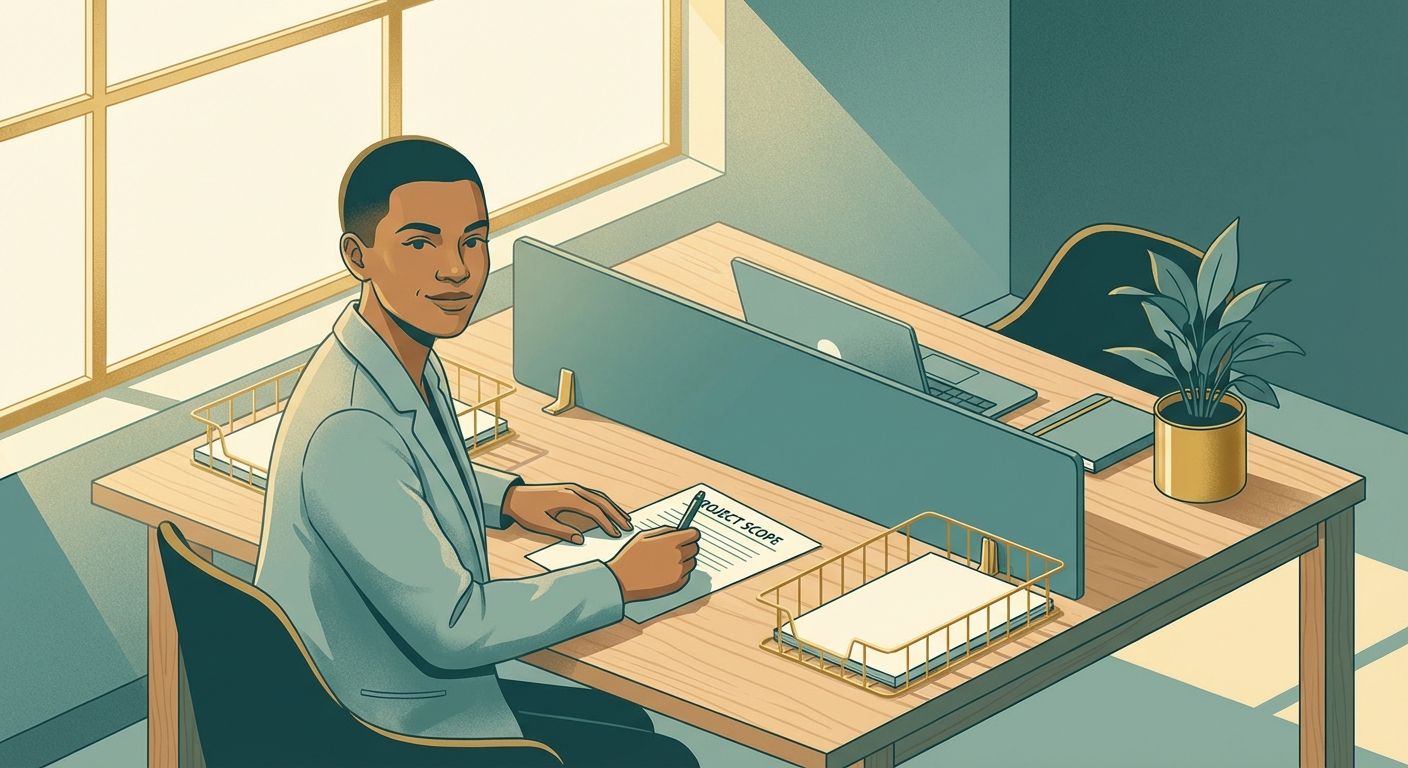
"I'm pretty flexible." If you're a freelancer, consultant, or small service provider, you've probably said this to a client. Maybe in a discovery call. Maybe in...
Connect your tools in five minutes. Let the first reminder go out tomorrow morning — sounding exactly like you'd write it yourself.
Start my free 14-day trial