 QuickBooks
  Xero
Xero  FreshBooks
  Wave
Wave The 5 Tools Every Freelancer Should Have By Their Second Year
Your first year of freelancing rewards hustle. You can keep clients, tasks, and invoices in your head, in your inbox, and in a couple of Google Docs you mostly...
Read More
New research shows small business owners lose 15 hours weekly to repetitive admin tasks. That's nearly 40% of your work week—and thousands of dollars—quietly draining away. Here's where the time goes and how to stop the bleed.
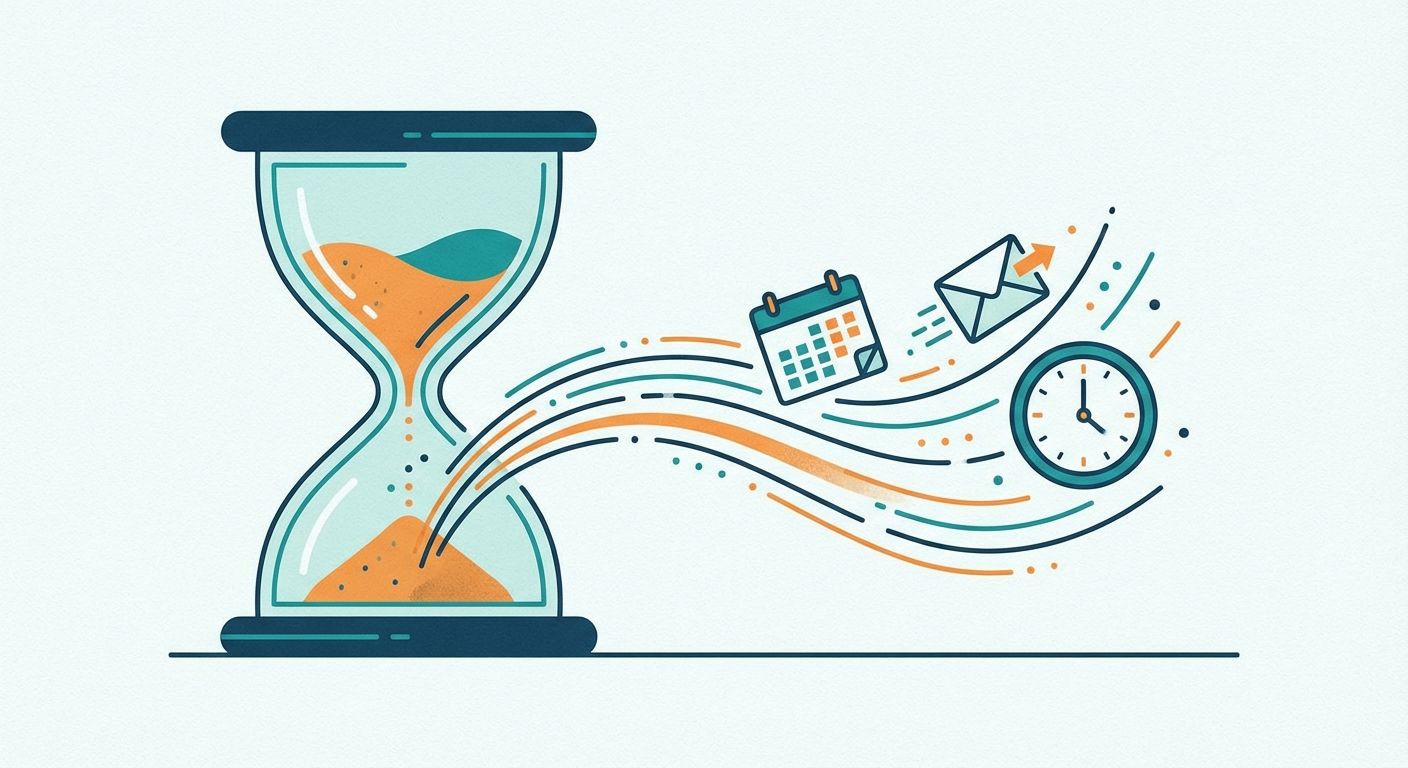
What if I told you there's a hidden tax eating nearly 40% of your work week—and you've been paying it willingly?
New research confirms what most service business owners already feel in their bones: small businesses waste an average of 15 hours every single week on low-leverage, repetitive administrative tasks. That's not a typo. Fifteen hours. Every week.
Let's do some quick math on what that actually costs you.
If you charge $100 per hour for your services (and many consultants, designers, and professionals charge more), here's what 15 hours of admin work costs you:
But here's the part that really stings: 15 hours per week multiplied by 52 weeks equals 780 hours per year. That's nearly 20 full work weeks spent on tasks that don't move your business forward.
Twenty weeks. Almost five months of your year. Gone to tasks you probably don't even remember doing.
The research breaks down the time drain into three main categories:
This is the big one. Writing emails. Following up on proposals. Chasing responses. And the silent killer: sending invoice reminders.
Every "just checking in" email. Every awkward "wanted to follow up on that invoice" message. Every time you draft, delete, redraft, and finally send a reminder that feels too pushy or too passive. That's time—and emotional energy—you're never getting back.
Captions. Posts. Newsletters. The endless hamster wheel of "staying visible" that somehow never feels done. You know you should be posting, but every post feels like starting from scratch.
Document formatting. Scheduling coordination. Invoice creation. The paper cuts of running a business that individually seem small but collectively bleed you dry.
Here's what makes the 15-hour tax so insidious: it doesn't feel like 15 hours.
It feels like 10 minutes here. A quick email there. "Let me just write that follow-up real quick." These micro-interruptions fragment your day, destroy your focus, and prevent you from doing the deep work that actually grows your business.
The research shows that context-switching—bouncing between admin tasks and real work—can reduce productivity by up to 40%. So it's not just the 15 hours you lose directly. It's the quality of the remaining 25 hours that suffers too.
Here's the frustrating part: 78% of small businesses say they plan to adopt AI tools in 2026. And yet most are stuck using generic tools that require so much hand-holding they barely save time at all.
The problem? Context is missing.
A generic AI tool doesn't know your clients. It doesn't know your tone. It doesn't know that Sarah always pays on time but needs a gentle nudge, while Mike requires a firmer approach. Without context, AI outputs require heavy editing—which means you're back to doing the work yourself.
The businesses that are actually reclaiming their 15 hours aren't using more tools. They're using smarter tools—ones that understand their specific situation and can act accordingly.
The research suggests you don't need to automate everything. You just need to automate the right things.
Context-aware automation can reduce administrative workload by up to 70%. Email drafting time alone can drop by 80%. That means those 6 hours of client communication could shrink to just over an hour—if you have the right systems in place.
Start with the highest-ROI automation targets:
This is the question worth sitting with.
Fifteen hours is almost two full workdays. Every single week. You could:
The 15-hour tax isn't inevitable. It's a choice—one most business owners don't realize they're making.
You started your business to do work you love for clients who value it. Not to spend a third of your week writing reminder emails and formatting documents.
The 15-hour tax is real. But unlike actual taxes, this one is optional.
The question isn't whether you can afford to automate these tasks. It's whether you can afford not to.

Your first year of freelancing rewards hustle. You can keep clients, tasks, and invoices in your head, in your inbox, and in a couple of Google Docs you mostly...

The work is your best work. The client is a great fit. You have rehearsed the number on the drive in. Then the moment arrives, your throat tightens, and what co...

Every few months the same debate cycles back through the freelance internet. One camp insists retainers are the only adult way to run a service business — stead...
Connect your tools in five minutes. Let the first reminder go out tomorrow morning — sounding exactly like you'd write it yourself.
Start my free 14-day trial